
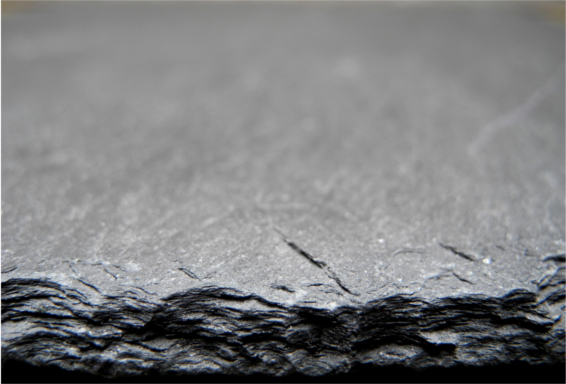
 Slate is a fine-grained, foliated, homogeneous metamorphic rock derived from an original shale-type sedimentary rock composed of clay or volcanic ash through low-grade regional metamorphism. It is the finest grained foliated metamorphic rock. Foliation may not correspond to the original sedimentary layering, but instead is in planes perpendicular to the direction of metamorphic compression.
The very strong foliation is called “slaty cleavage”. It is caused by strong compression causing fine grained clay flakes to regrow in planes perpendicular to the compression. When expertly “cut” by striking parallel to the foliation, with a specialized tool in the quarry, many slates will form smooth flat sheets of stone which have long been used for roofing and floor tiles and other purposes. Slate is frequently grey in color, especially when seen, en masse, covering roofs. However, slate occurs in a variety of colors even from a single locality; for example, slate from North Wales can be found in many shades of grey, from pale to dark, and may also be purple, green or cyan. Slate is not to be confused with shale, from which it may be formed, or schist. Ninety percent of Europe’s natural slate used for roofing originate from Spain.
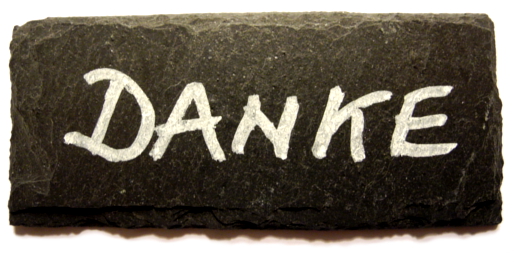
 The word “slate” is also used for certain types of object made from slate rock. It may mean a single roofing tile made of slate, or a writing slate. This was traditionally a small smooth piece of the rock, often framed in wood, used with chalk as a notepad or noticeboard, and especially for recording charges in pubs and inns. The phrases “clean slate” and “blank slate” come from this usage.
The History of Writing Slate: The exact origins of the writing slate remain unclear, but references to its use can be found as far back as the fourteenth century and evidence suggests that it was used on occasion through the sixteenth and seventeenth centuries as well. The central time period for the writing slate, however, “appears to begin in the later eighteenth century, when developments in sea and land transport permitted the gradual expansion of slate quarrying in Wales and the growth of a substantial slate workshop industry.” By the nineteenth century, writing slates were used around the world in nearly every school and were a central part of the overall slate industry. At the dawn of the twentieth century, writing slates were still the primary tool in the classroom for students and it was not until the 1930s (or later) that writing slates started being replaced by more modern methods. However, writing slates did not become obsolete. They are still made today, though in small quantities.
source: http://en.wikipedia.org/wiki/Slate